Supercharger Gasket — Essential Sealing Component for Supercharged Engines
High-Quality Supercharger Gaskets for Engine & Generator Systems
A supercharger gasket is a precision-manufactured sealing component that creates a tight, leak-free seal between the supercharger and engine components, ensuring proper airflow and pressure in forced induction systems. Whether for industrial engines, automotive superchargers, or generator systems with supercharger kits, a reliable gasket keeps boost pressure where it should be and prevents fluid or air leaks that can harm performance and efficiency.
What Is a Supercharger Gasket?
A supercharger gasket is used where two mating surfaces — such as the supercharger housing and intake manifold or blower base — meet. It fills microscopic imperfections between flanges to prevent:
Air leaks that reduce boost pressure
Oil or coolant leaks around the supercharger sealing surfaces
Loss of engine performance due to improper sealing
Supercharger gaskets are commonly made from high-temperature composite materials or metal composite materials designed to withstand the rugged conditions inside forced-induction systems.
Key Features & Benefits
✔ Reliable Sealing Performance
Precision-cut gaskets ensure a secure seal between the supercharger and engine components, maintaining proper boost and preventing leaks.
✔ Heat & Pressure Resistance
Supercharger gaskets are manufactured using composite or reinforced materials capable of withstanding high temperatures and pressures typical in forced-induction engines.
✔ Precision Fit for OEM or Aftermarket Systems
Available for a wide range of applications — from performance superchargers to OE replacements — to deliver consistent fit and function.
✔ Durability for Long-Term Operation
Designed to resist wear and compression set, gaskets help maintain reliable sealing over extended service life and repeated thermal cycles.
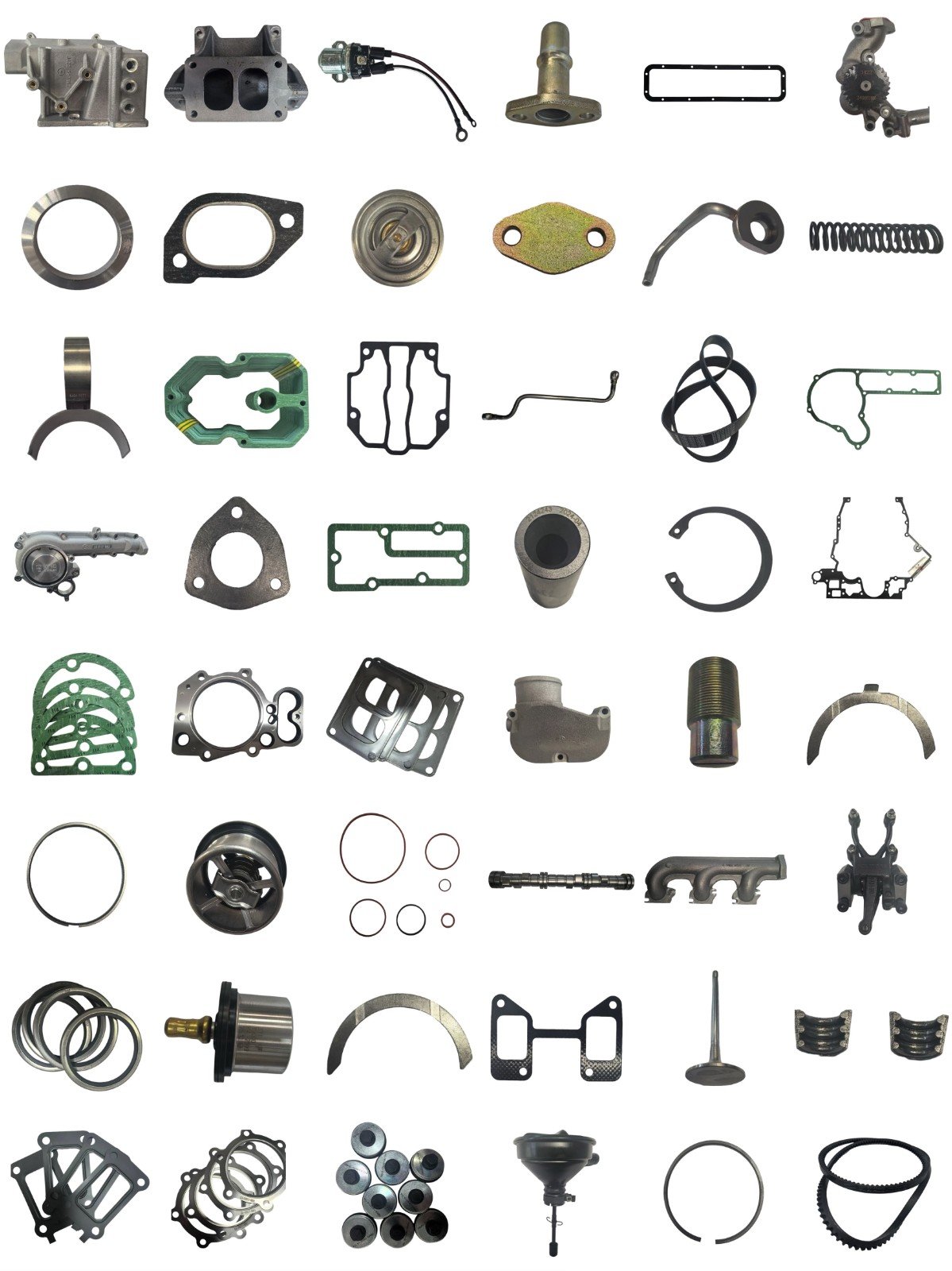
Other sapre parts
Typical Applications
Supercharger gaskets are widely used in:
Performance and racing supercharged engines
Heavy-duty industrial engines with forced induction
Generator engines equipped with supercharger kits
Automotive supercharger systems
Marine or powersports forced-induction applications
They are an essential part of any supercharger installation or rebuild project, ensuring that intake air and oil do not leak from critical joints.
Materials & Construction
Supercharger gaskets can be made from:
Composite materials (fiber or cellulose/nitrile blends) — excellent balance of sealing and compressibility.
Metal-reinforced composites — stronger under high temperature and pressure.
High performance heat-resistant materials — for extreme boost and racing conditions.
Composite gaskets are precision die-cut to match exact flange shapes and thicknesses for correct sealing performance.
How Supercharger Gaskets Work
Installation of a supercharger gasket involves placing it between mating surfaces — such as the supercharger and the manifold or housing — and tightening bolts to compress the gasket. This compression fills irregularities and forms a continuous barrier that prevents leaks of air, oil, or coolant, which is critical for maintaining engine boost and performance.
Proper gasket selection and installation help preserve boost pressure and airflow, which in turn optimize engine power and efficiency.
Signs You Need a New Supercharger Gasket
Boost pressure loss
Visible air or oil leaks near the supercharger
Reduced engine performance or response
Unusual engine noises at boost
If your supercharged engine experiences these issues, worn or improperly sealed gaskets could be the cause. Replacing them helps restore proper operation.
Installation & Maintenance Tips
✔ Always inspect gasket sealing surfaces for flatness and cleanliness before installation.
✔ Use the correct torque specifications when tightening bolts to avoid over-compressing or damaging the gasket.
✔ Replace old gaskets during supercharger rebuilds or maintenance intervals to ensure long-lasting performance.
✔ Check for leaks after installation to confirm proper sealing.
Proper gasket installation contributes to consistent performance and reduced future maintenance — especially in high-boost or high-temperature environments.
FAQ — Supercharger Gaskets
Q: What does a supercharger gasket do?
A: It creates a tight seal between the supercharger housing and mating components — such as the intake manifold — to prevent air and fluid leaks.
Q: How often should supercharger gaskets be replaced?
A: Gasket life depends on engine use, temperatures, and maintenance habits. Replace them during rebuilds or if leaks and performance issues arise.
Q: Are all supercharger gaskets the same?
A: No. They vary in shape, thickness, and material depending on the engine model and supercharger system. Always choose the correct gasket for your application.


