Leading Sealing Ring Supplier for All Your Industrial Needs
About Sealing Rings
A sealing ring is a critical component used in a wide variety of industrial applications to ensure leak-free and reliable sealing. It provides an airtight or fluid-tight seal between two mating surfaces, preventing leakage of gases, liquids, or contaminants. Sealing rings are crucial in numerous industries, including automotive, aerospace, manufacturing, and HVAC systems.
At EN-GENERATOR, we are proud to be a trusted supplier of high-quality sealing rings, offering products that meet the highest standards of durability, performance, and reliability.
Why Choose Us as Your Sealing Ring Supplier?
Premium Quality: We manufacture sealing rings using the finest materials, including rubber, silicone, PTFE (Teflon), and metal alloys, ensuring long-lasting performance.
Wide Range of Applications: Our sealing rings are versatile and cater to a broad range of industries, including automotive, construction, oil & gas, and food processing.
Customization Options: We provide customized sealing ring solutions tailored to your specific needs. Whether you require unique dimensions, materials, or designs, we have you covered.
Timely Delivery: We understand the importance of keeping your operations running smoothly. We guarantee timely and reliable delivery to ensure your projects stay on schedule.
Competitive Pricing: As a direct supplier, we offer cost-effective solutions without compromising on quality.
Types of Sealing Rings We Supply
We offer a wide range of sealing rings designed for various applications. Our sealing rings are available in different materials, sizes, and configurations to suit diverse sealing needs.
O-Rings
O-rings are one of the most commonly used sealing rings, known for their simple design and reliable sealing properties. They are used in automotive engines, pumps, hydraulic systems, and more.
V-Rings
V-rings are ideal for sealing rotating shafts and provide excellent protection against dust, dirt, and moisture. They are widely used in automotive, heavy machinery, and industrial applications.
X-Rings
Also known as quad rings, X-rings provide superior sealing performance compared to traditional O-rings. Their unique design reduces friction and wear, making them ideal for hydraulic and pneumatic systems.
Backup Rings
Backup rings are used alongside O-rings to prevent extrusion and enhance sealing efficiency, especially in high-pressure environments. These rings are typically used in heavy-duty industrial machinery and hydraulic applications.
Lip Seals
Lip seals are designed to protect against contamination in rotating shafts. They are commonly used in automotive, machinery, and equipment where shaft movement is involved.
Rotary Seals
Rotary seals are used in applications where a shaft or other component rotates within a housing. They are designed to handle higher pressures and are often found in automotive, aerospace, and manufacturing equipment.
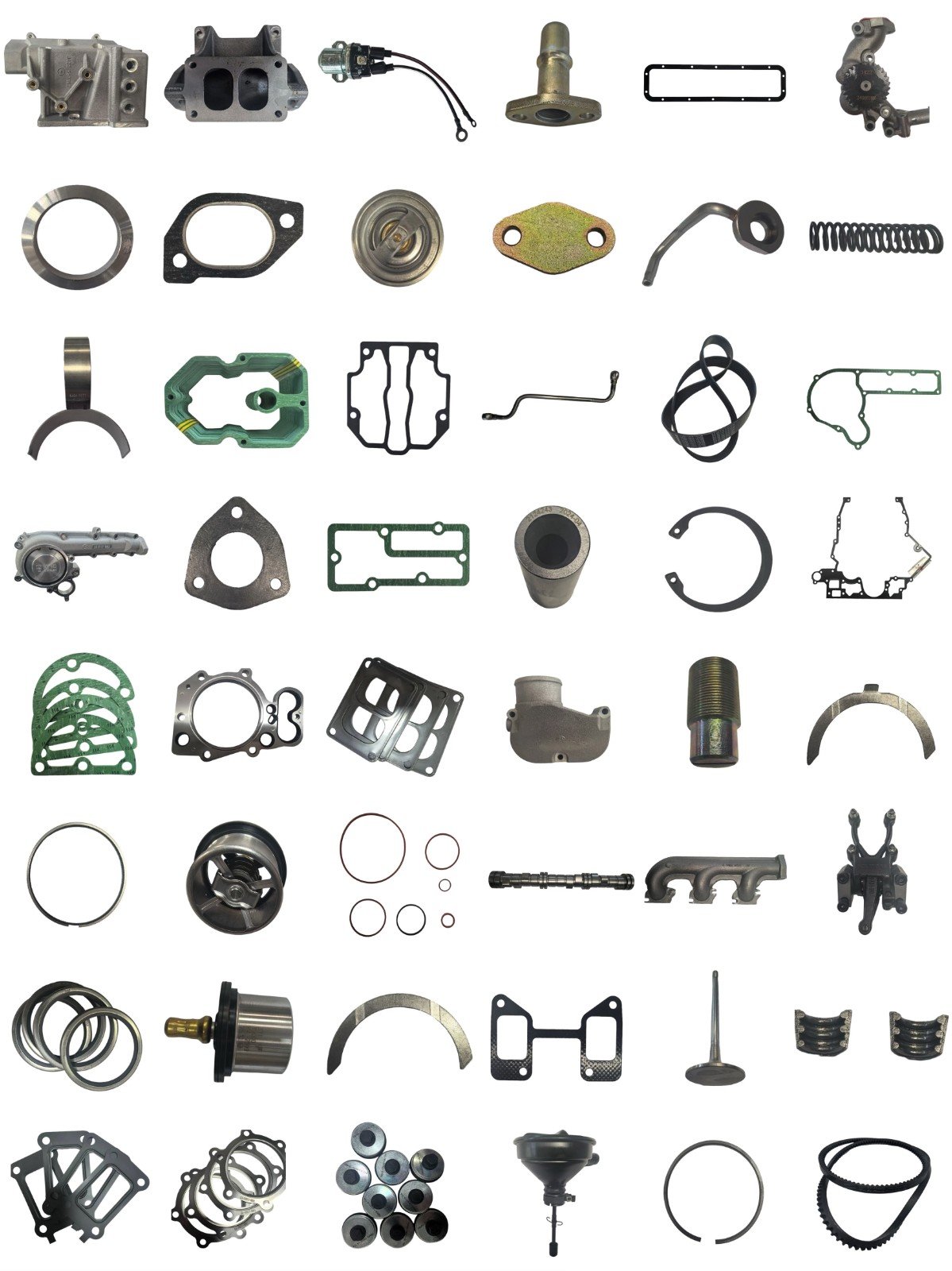
More sapre parts
Applications of Sealing Rings
Sealing rings play an essential role in a wide range of industries. Here are some common applications:
Automotive: Ensuring a tight seal in engine components, transmissions, and fuel systems to prevent fluid and gas leakage.
Hydraulic Systems: Sealing hydraulic cylinders and valves to maintain fluid pressure and prevent leaks.
Aerospace: Providing leak-proof seals in fuel systems, hydraulic systems, and high-pressure environments.
Oil & Gas: Preventing leaks in pipelines, pressure vessels, and pumps used in drilling and extraction processes.
Industrial Machinery: Ensuring effective sealing in machinery such as compressors, pumps, and conveyors.
HVAC: Sealing air ducts, compressors, and piping systems to improve energy efficiency and performance.
Food & Beverage: Offering sanitary seals for food processing equipment to meet health and safety standards.
Why Sealing Rings Are Essential
Sealing rings offer multiple benefits, including:
Leak Prevention: They effectively prevent the leakage of fluids or gases, keeping systems clean, safe, and efficient.
Enhanced Performance: By ensuring tight seals, they contribute to the overall performance of machines and engines, improving reliability and longevity.
Contamination Prevention: Sealing rings protect critical components from dirt, moisture, and chemicals that could cause damage.
Cost Savings: A high-quality sealing ring reduces the risk of system failure, costly repairs, and downtime, saving you money in the long term.
Common FAQs
1. How do I select the right sealing ring material?
The choice of material depends on the specific application and the environmental conditions. For example, rubber and silicone are ideal for general sealing, while PTFE (Teflon) is better for high-temperature and chemical-resistant applications. Our experts can assist you in choosing the right material for your needs.
2. Are custom-sized sealing rings available?
Yes! We offer custom sealing rings tailored to your exact specifications, including size, material, and design. Simply provide the necessary details, and we will work with you to create the perfect solution.
3. What are the benefits of using O-rings over other types of sealing rings?
O-rings are widely used due to their simplicity, reliability, and cost-effectiveness. They are versatile, easy to install, and provide excellent sealing performance in a wide range of applications. However, other types like X-rings or V-rings may be better suited for specific needs, such as reducing friction or handling rotary motion.
4. How long do sealing rings last?
The lifespan of a sealing ring depends on various factors, including the material used, operating conditions (temperature, pressure, chemicals), and maintenance practices. Generally, high-quality sealing rings can last several years before needing replacement.
5. How do I maintain sealing rings?
To extend the life of your sealing rings, ensure proper installation, regular inspections for signs of wear or damage, and replace them promptly if needed. It's also important to ensure that they are not exposed to extreme conditions beyond their design limits.


