Sealing Ring — Reliable Sealing Solutions for Engines & Industrial Systems
High-Quality Sealing Rings for Leak-Free Mechanical Sealing
A sealing ring is a crucial sealing component used in various engines, hydraulic systems, and industrial machinery to prevent the escape of fluids or gases from joints, shafts, and mating surfaces. Sealing rings are typically annular (ring-shaped) components that compress between two parts to create a tight, durable seal.
Whether in engine assemblies, pump shafts, valves, or piping interfaces, sealing rings help ensure system reliability, efficiency, and longevity in demanding operating conditions.
What Is a Sealing Ring?
A sealing ring is a ring-shaped gasket or gasket-like seal used to block leakage paths between mechanical parts. It fills the gap or interface between components, creating a seal that resists fluid or gas passage under pressure.
Sealing rings are used in both static applications (where parts do not move relative to each other) and dynamic applications (such as rotating shafts or reciprocating pistons).
Key Features & Benefits
✔ High Sealing Efficiency
Sealing rings form a reliable barrier that prevents leaks of oil, coolant, air, or gas, improving system performance and preventing contamination.
✔ Durable & Versatile Materials
Sealing rings are available in a range of materials—including elastomers and metals—designed to suit different media, temperatures, and pressures. PRABHAT USA
✔ Suitable for Static & Dynamic Sealing
Many sealing ring designs (such as O-rings) can function both in static seals and in assemblies where relative motion exists between parts.
✔ Simple Installation & Cost-Effective
Sealing rings are easy to install, compact, and typically cost-effective compared to complex sealing systems, making them ideal for both standard and high-performance applications.
Typical Applications
Sealing rings are used across a wide range of industries and mechanical systems, including:
Automotive engines and transmissions
Diesel and gas generator sets
Hydraulic and pneumatic equipment
Pumps and compressors
Valves, flanges, and pipe joints
Industrial machinery and mechanical assemblies
They help maintain leak-free connections, pressure retention, and protection against dust and contaminants, improving safety and operational performance.
More sapre parts
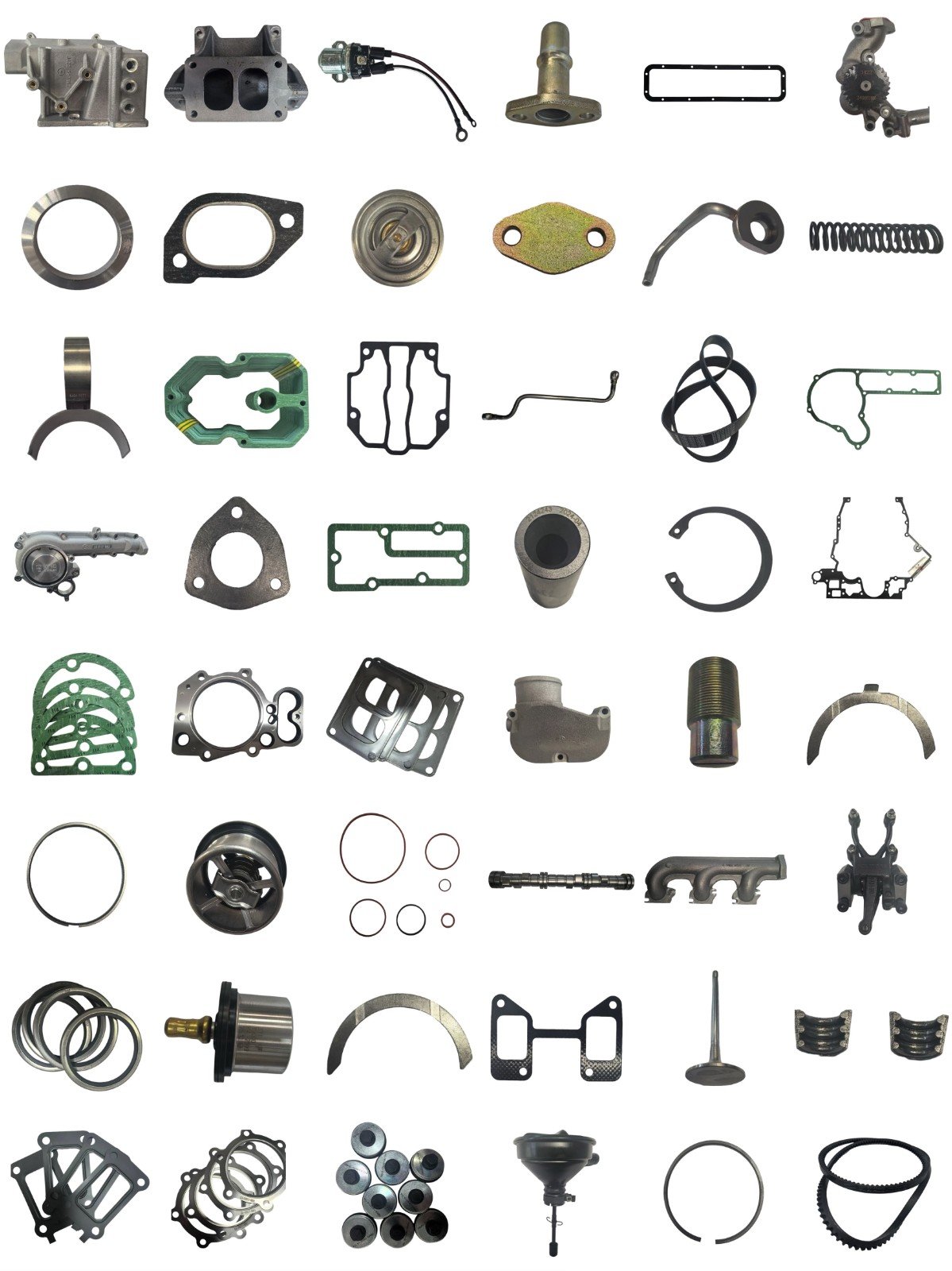
Types of Sealing Rings
Sealing rings come in various forms depending on application and design needs:
O-Rings
A common form of sealing ring featuring a circular cross-section, typically made of elastomer materials for versatile sealing performance.
Metal & Composite Sealing Rings
Designed for high-temperature, high-pressure environments and often used in heavy industrial and petrochemical applications.
Ring Gasket Seals
Ring-type gaskets that fit inside flange bolt circles, sealing only around the bore for compact and effective sealing.
Manufacturers can also offer custom sealing rings tailored to specific machinery or environmental demands, such as pressure, chemical media, or temperature extremes.
How Sealing Rings Work
When a sealing ring is placed between two mating surfaces and compressed, it fills irregularities and blocks fluid or gas flow through the interface. In dynamic sealing (such as around a rotating shaft), certain sealing rings are designed to maintain lubrication inside while keeping contaminants out.
Correct material selection and proper installation—ensuring the ring fits grooves and compression specifications—are key factors in achieving optimal sealing performance.
Material Selection & Performance
Common materials used for sealing rings include:
Elastomers (rubber, silicone, Viton, etc.) for flexibility and chemical resistance
Metal alloys and composite materials for high-temperature and high-pressure sealing performance
Specialty polymers for corrosion resistance and long service life
Choosing the right material depends on temperature range, pressure conditions, fluid type, and mechanical load.
Signs a Sealing Ring Needs Replacement
Sealing ring performance can degrade over time. Common signs include:
Leakage of fluids or gases from joints
Pressure loss in hydraulic systems
Increased contamination or wear around seals
Excessive vibration or noise due to seal failure
Timely replacement prevents system failures and costly downtime.
Installation & Maintenance Tips
✔ Ensure mating surfaces are clean and free of debris before installation
✔ Use the correct groove size and compression to avoid premature wear
✔ Inspect sealing rings regularly during maintenance intervals
✔ Replace worn or damaged rings to maintain system integrity
Proper handling and installation ensure long service life and reliable sealing performance.
FAQ — Sealing Rings
Q: What is the difference between a sealing ring and a full gasket?
A: A sealing ring typically seals only around a specific ring-shaped surface (often inside a flange or groove), while a full gasket covers the entire face of a joint.
Q: Can sealing rings be used in high-pressure systems?
A: Yes—specialized sealing rings made from high-strength materials or designed as ring joint gaskets are suitable for high-pressure and high-temperature applications.
Q: Are sealing rings reusable?
A: In most cases, sealing rings should be replaced rather than reused, especially if they show signs of deformation or wear.


