Exhaust Pipe Gasket Assembly — High-Temperature Sealing for Exhaust Systems
Premium Exhaust Pipe Gasket Assembly for Engines & Turbocharged Systems
An exhaust pipe gasket assembly is a complete sealing solution designed to join exhaust pipes, flanges, and related exhaust system components while preventing exhaust gas leaks, reducing noise, and ensuring optimal engine performance. It is an essential part of any internal combustion engine’s exhaust system, especially in turbocharged and high-temperature applications.
What Is an Exhaust Pipe Gasket Assembly?
An exhaust pipe gasket assembly typically includes one or more gaskets, seals, and sometimes fasteners that form a tight, heat-resistant seal between exhaust pipe flanges, manifolds, turbocharger outlets, and downstream exhaust components. These gaskets are engineered to fill gaps between mating metal surfaces and prevent escape of exhaust gases at connection points.
Exhaust gases are hot and corrosive, so the gasket materials must withstand high temperatures, thermal cycling, vibration, and pressure changes within the exhaust system.
Key Features & Benefits
✔ Effective Sealing Under High Temperatures
Exhaust gaskets in the assembly are made from heat-resistant materials such as multi-layer steel, graphite composites, or high-temperature fibers that can handle extreme exhaust heat and maintain a secure seal.
✔ Prevents Exhaust Leaks & Reduces Noise
Proper sealing prevents leaks of exhaust gases at flange joints, which improves engine efficiency, reduces unwanted hissing or popping sounds, and minimizes environmental emissions.
✔ Compensates for Thermal Expansion & Vibration
Gasket assemblies are designed to absorb movement and vibration between exhaust components, accommodating expansion and contraction during engine operation. This protects metal flanges and prolongs service life.
✔ Durable & Corrosion-Resistant
Materials such as multi-layer steel and graphite composites resist corrosion from exhaust condensates and long-term heat stress, making these gasket assemblies suitable for demanding industrial and automotive applications.
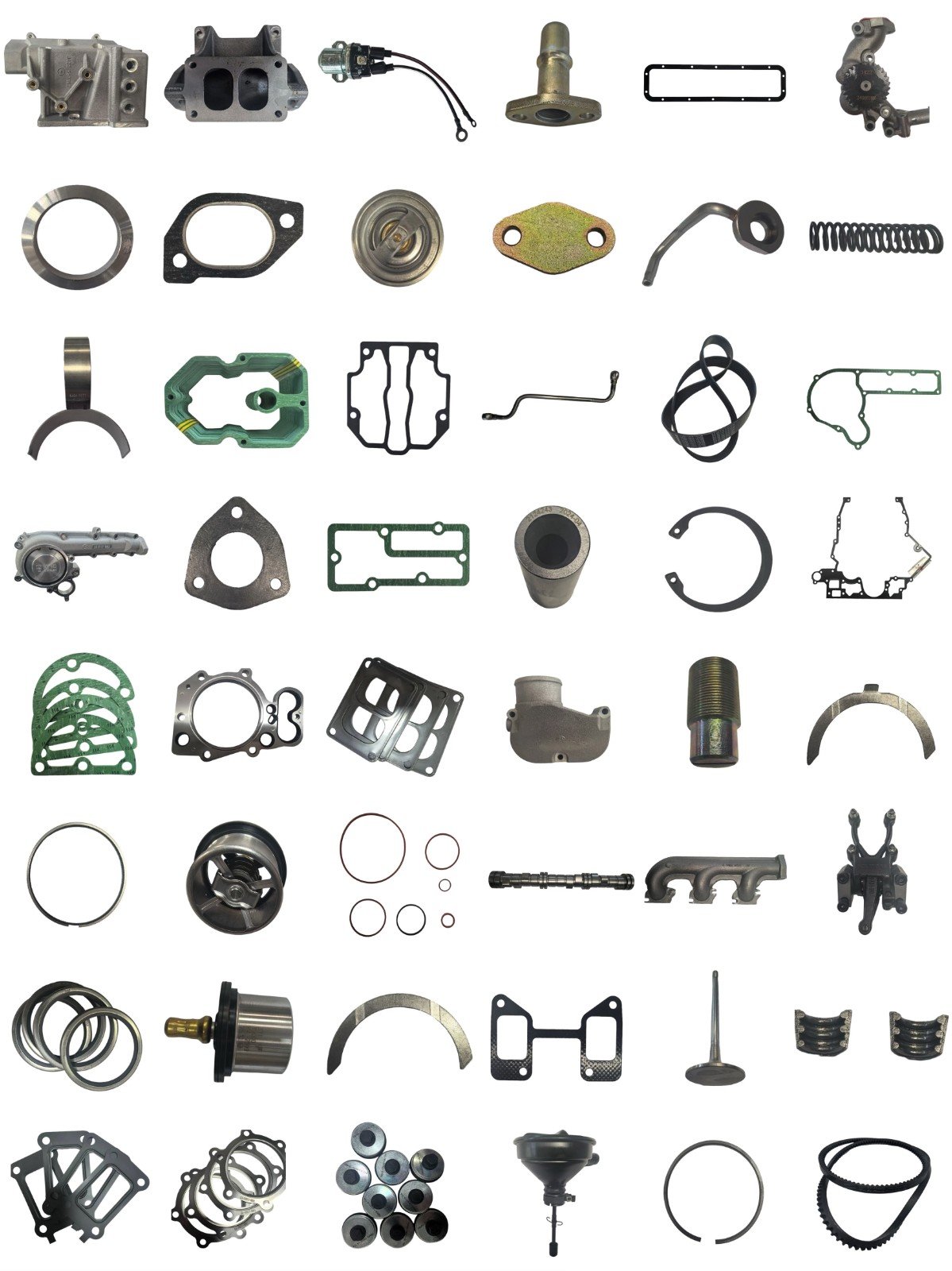
More sapre parts
Typical Applications
Exhaust pipe gasket assemblies are used in:
Diesel and gasoline engines
Turbocharged engines and exhaust systems
Industrial generator engines
Heavy-duty trucks and construction machinery
Exhaust manifolds, downpipes, and flange connections
They help maintain the integrity of exhaust paths, ensuring all exhaust gases pass through catalytic converters, silencers, and emission control devices efficiently.
How Exhaust Pipe Gasket Assemblies Work
In an exhaust system, exhaust gases flow from the engine exhaust manifold through pipes and components such as turbochargers, catalytic converters, and mufflers before exiting the tailpipe. At each joint or flange connection, a gasket assembly provides a tight seal to prevent gas leakage.
The gaskets are compressed between metal flange faces by bolts or studs, filling tiny surface irregularities and maintaining sealing under high thermal and pressure cycles. Quality gasket materials resist flattening and blow-out even after repeated engine heat cycles.
Signs of a Failing Exhaust Gasket
A worn or damaged exhaust pipe gasket assembly can lead to:
Hissing or tapping exhaust noise near flange joints
Visible exhaust leaks or soot marks around pipe connections
Reduced engine performance and fuel efficiency
Unusual smells near the engine bay or cabin
If these symptoms are present, exhaust leaks should be inspected — a compromised gasket can affect emissions, performance, and even sensor readings.
Installation & Maintenance Tips
✔ Inspect Gasket Surfaces Before Installation – Ensure mating flange surfaces are clean and free of corrosion or debris for optimal sealing.
✔ Use Correct Torque Specifications – Tighten bolts evenly to achieve uniform compression of the gasket.
✔ Replace During Exhaust Overhaul – Whenever the exhaust system is disassembled, install new gasket assemblies to prevent future leaks.
✔ Check After Assembly – After installation, inspect for any signs of leaks under operation.
Proper installation and maintenance enhance exhaust system durability and reduce the risk of future leaks.
Materials Used in Exhaust Pipe Gaskets
Exhaust gaskets in an assembly are typically made from:
Multi-Layer Steel (MLS) – Excellent for high temperature and repeated thermal cycling.
Graphite Composite Materials – Provides high heat resistance and compressibility.
High-Temperature Fiber Materials – Lightweight and suitable for certain flange types.
Each material type is chosen based on temperature tolerance, flexibility, vibration resistance, and application requirements.
FAQ — Exhaust Pipe Gasket Assembly
Q1: What is the purpose of an exhaust pipe gasket assembly?
A: It seals the joints between exhaust system components like pipes and flanges, preventing exhaust gas leaks, reducing noise, and maintaining proper system performance.
Q2: How often should exhaust gaskets be replaced?
A: Replace gaskets when performing exhaust system maintenance or if there are signs of leaks. Over time, heat cycles can degrade gasket materials.
Q3: Can a bad exhaust gasket affect engine performance?
A: Yes — leaks can change backpressure and airflow readings, reducing performance and potentially causing inaccurate sensor feedback.


