How It Works
Industrial processes release exhaust gases containing combustible components such as CO, CH₄, H₂, VOCs, and hydrogen-rich synthetic gases.
The generator set captures and filters the gas, mixes it with air, and burns it in a lean-burn combustion chamber. The resulting mechanical energy drives the alternator, producing electricity.
Typical gas calorific value range:
1.3–2.5 MJ/Nm³ (after pretreatment)
Suitable exhaust gas sources include:
Coking furnaces
Lime kilns
Chemical process off-gas
Metallurgical furnace gas
Synthetic industrial flue gas
CO-rich gas from steel manufacturing
System Composition
Gas pretreatment unit (H₂S removal, dust filter, moisture separator)
Low-pressure gas supply pipeline
Heavy-duty lean-burn engine
Turbocharger optimized for low-LHV intake
High-energy ignition system
Automatic knock-detection system
High-efficiency alternator
PLC control panel with remote monitoring
Optional CHP module for heat recovery
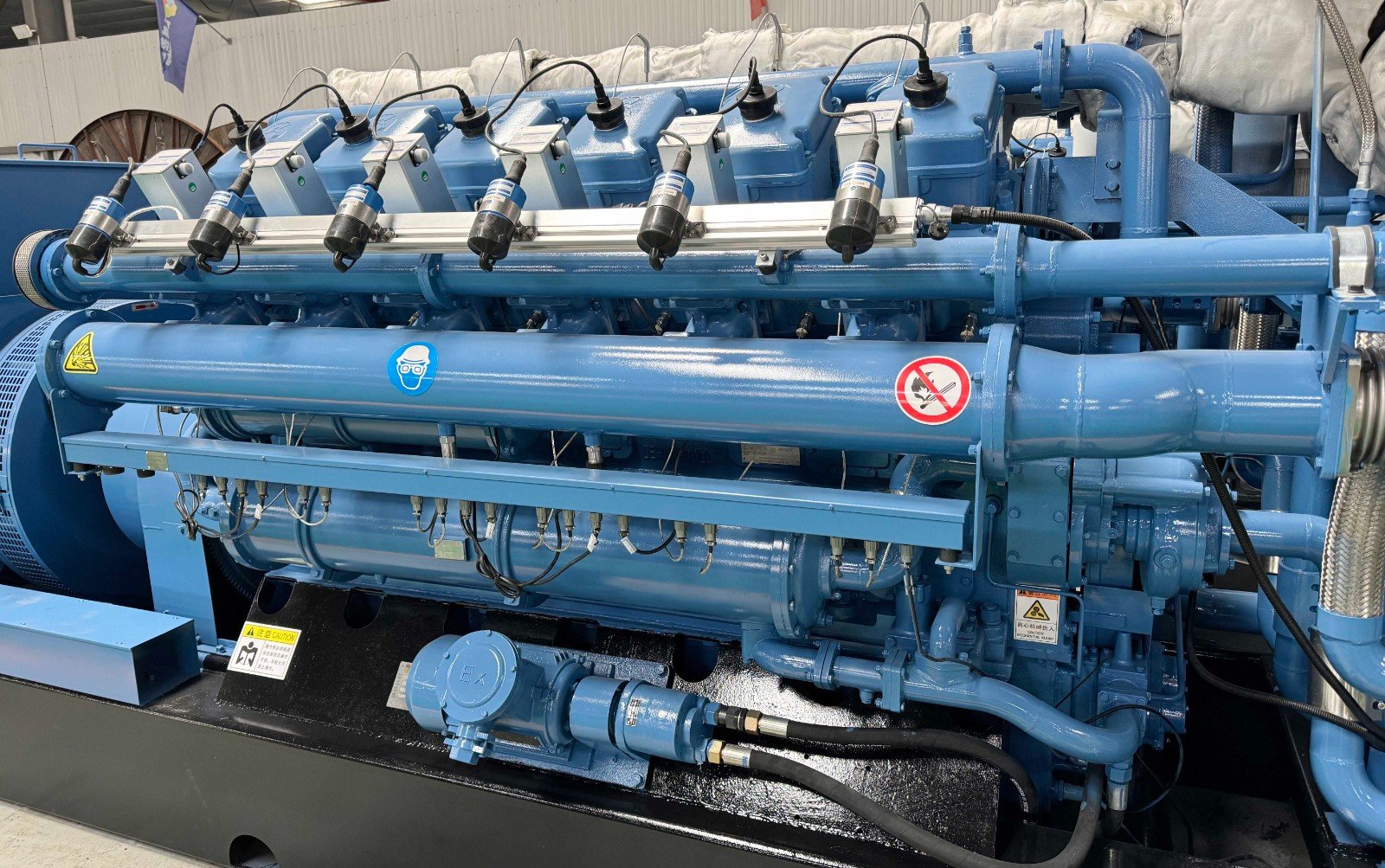
Introduction to Technical Features
Turbocharging and shunt Intake technology:
Avoiding the generation of mixed gas, the gas and air enters the cylinder isolated with no contact. At the same time, the exhaust enery from the generator will be used for turbocharing the gas and air respectively. It realizes the improvement of intake and the synchronous improvement of operation power and volume power and ensures safety operation at the same time.
From 2018 till now, the safe stayale running time is more than 30000 hours. The measured electric efficiency is more than 40% in practice - 1m3 exhaust gas generates one kilowatt-hour of electricity.
There is no carbon monoxide leakage, no backfire and flash explosion, and the genset runs smoothly. Self consumption rate is less than 2%. The operation control of the genset is automatically adjusted with the change of gas.
Technical parameters
| Model | CP22 | CP21 | CP11 | CP14 |
| CP1200GFJ22 | CP900GFJ21 | CP700GFJ11 | CP600GFJ11 | CP500GFJ11 | CP250GFJ14 | CP200GFJ14 |
| Electrical Output(kw) | 1200 | 900 | 700 | 600 | 500 | 250 | 200 |
| Electrical Efficiency(%) | 40 | 38 | 38 | 36 | 36 | 35 | 34 |
| Thermal Efficiency(%) | 44 | 45 | 45 | 44 | 43 | 44 | 43 |
| Total Efficiency(%) | 84 | 83 | 83 | 80 | 79 | 79 | 77 |
| Cylinder Number | 16 | 12 | 12 | 12 | 12 | 6 | 6 |
| Discharge(L) | 104.34 | 78.25 | 71.45 | 71.45 | 71.45 | 35.7 | 35.7 |
| Speed(r/min) | 1000 | 1200 | 1000 | 1200 | 1000 | 1200 | 1000 | 1200 | 1000 | 1200 | 1000 | 1200 | 1000 | 1200 |
| Frequency(Hz) | 50 | 60 | 50 | 60 | 50 | 60 | 50 | 60 | 50 | 60 | 50 | 60 | 50 | 60 |
| Length(mm) | 7409 | 6400 | 6300 | 6300 | 6300 | 4500 | 4500 |
| Width(mm) | 1822 | 1950 | 1950 | 1950 | 1950 | 1300 | 1300 |
| Height(mm) | 2325 | 2175 | 2175 | 2175 | 2175 | 2365 | 2365 |
| Weight(kg) | 19000 | 15000 | 14000 | 13500 | 13500 | 8400 | 7000 |
Key Performance Advantages
Electrical efficiency: 34–38% depending on gas quality
Ultra-low NOx emissions
Strong tolerance to gas fluctuations (±20% calorific value)
High engine protection for corrosive components
Lower fuel cost than natural gas gensets by 30–50%
95% annual availability and stable output under rated load
Industrial Applications
Chemical production plants
Cement & lime industry
Metallurgical furnaces
Coking gas utilization
Heat recovery power stations
On-site industrial distributed power systems
Factories with available waste flue gas
Energy Saving & Cost Reduction
Using industrial exhaust gas instead of natural gas can reduce energy costs by:
35–60% annual fuel savings
Lower environmental emission fees
Reduced waste heat venting losses
Improved factory sustainability ratings
A typical 500kW generator operating 8,000 hours/year can save 140,000–220,000 USD annually depending on gas quality.
Maintenance Cycle
Spark plugs: every 2,000–3,000 hours
Oil & filters: every 1,000–1,500 hours
Top overhaul: 12,000–15,000 hours
Major overhaul: 24,000–30,000 hours
FAQ
Q: What is the minimum required gas pressure?
A: 2–5 kPa depending on pipeline length and flow rate.
Q: Can the generator operate in parallel with the grid?
A: Yes, optional parallel-control module supports multi-unit synchronization.
Q: What pretreatment system is needed?


