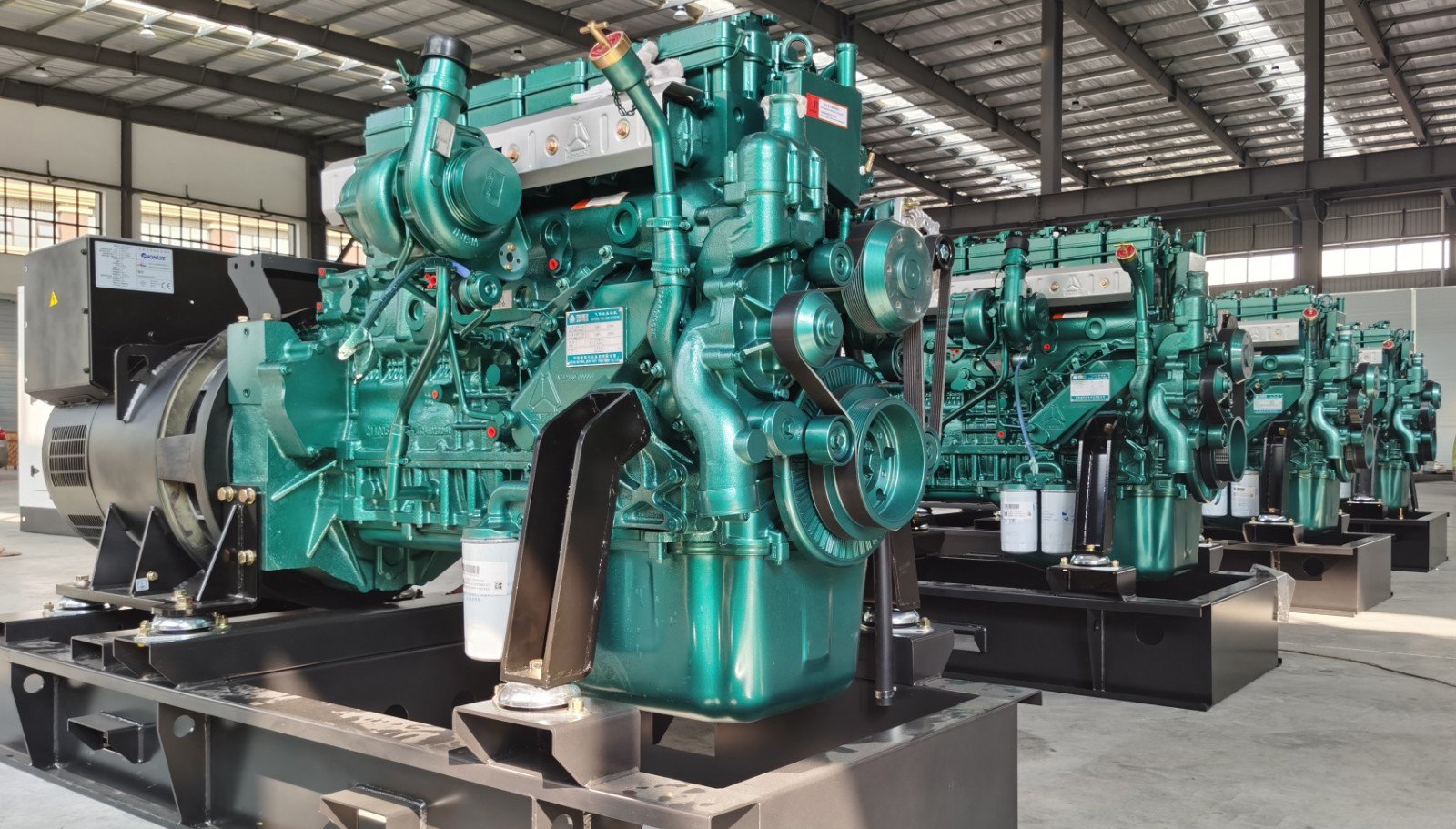
500kw Steyr Biogas Generator power plant 2 units in parallel

Detail Chart
Detail Chart
Detail Chart
Detail Chart
Detail Chart
Detail Chart
Detail Chart
Detail Chart
Detail Chart
Detail Chart
500kw Steyr Biogas Generator power plant 2 units in parallel
Description

The 500KW Steyr Biogas Generator Power Plant, equipped with two units in parallel, offers a scalable, high-efficiency energy solution designed to meet the needs of large-scale industrial, agricultural, and waste-to-energy projects. By running two units in parallel, this system maximizes energy output and reliability, providing a consistent and cost-effective renewable energy source. Powered by the reliable Steyr engine, this generator offers exceptional fuel efficiency, long-lasting performance, and minimal maintenance requirements, making it an ideal choice for businesses seeking to reduce their environmental impact while lowering operational costs.

Rated current:625kVA; 

Continuous power:400kw;

Frequency: 50Hz/60Hz; 

Voltage: 0.4kV/0.6kV/10.5kV; 

Operating noise:95dB(A)/7m;

Methane content:>50%;

Low heat value:Hu ≥ 21.3MJ/Nm;

Reference Weight: 8500kg; 

Dimensions (L×W×H): 6029mm×3000mm×4283mm;
Description

Product Features

  • Dual-Unit Parallel Configuration: The system uses two 250KW Steyr engines running in parallel to provide a combined output of 500KW, offering flexibility in power generation and ensuring continuous operation with minimal downtime.

  • Steyr Engine Technology: Powered by the Steyr engine, known for its durability, fuel efficiency, and low maintenance needs, ensuring high performance even in demanding environments.

  • Biogas Flexibility: This generator can operate on a variety of biogas fuels, including methane from agricultural waste, landfill gas, and other organic waste, offering flexibility in fuel sourcing and reducing dependency on fossil fuels.

  • Eco-Friendly Operation: The system reduces greenhouse gas emissions by using renewable biogas as fuel, making it an ideal solution for businesses looking to meet sustainability targets.

  • High Scalability: The ability to run two units in parallel allows for easy scalability, making it possible to add more units or modify output capacity as energy needs change.

  • Low Maintenance & High Durability: Designed for long-term use, the Steyr engine requires minimal maintenance, reducing operating costs and improving the overall return on investment.


Product Parameters

AC Alternator data

Gas engine data

Generator Brand

KWISE

Engine Brand

CNHTC

Motor Model

SG315250D4

Engine Model

Steyr 12

Rated Voltage(V)

400

Engine type

Inline 6 cylinders-turbocharged

Rated Power(H class)kW

250

Cylinder Bore x Stroke(mm)

126mm×115mm

Rated Capacity(H class)kVA

312

Displacement (L)

11.6

Motor efficiency (%)/(400V)

93

Compression ratio

11

Power factor

0.8

Rated output power (single)

280kW-1500rpm/1800rpm

Connection Methods

D/Y

Maximum lubricant consumption (g/kW.h)

0.3

Rotor insulation class

H class

Minimum air intake (kg/h)

1190

Rated temperature rise

H class

Ignition method

Electronically controlled single-cylinder independent high-energyignition

Excitation method

Brush-less

Fuel Control Method

Equivalent combustion, closed loop control

Rotation speed (min- 1)

1500/1800

Debugging method

Electronic commissioning

Shell protection grade

IP23


Applications

  • Industrial Applications: Ideal for industrial facilities, including manufacturing plants, food processing, and chemical industries, where reliable, renewable energy is needed to reduce reliance on the grid and lower operational costs.

  • Agricultural Operations: Perfect for agricultural operations that produce biogas from organic waste, such as manure, crop residues, or food processing waste, providing an efficient, renewable power source.

  • Waste-to-Energy Projects: Suitable for waste-to-energy plants, where organic waste is converted into clean electricity, reducing landfill waste and contributing to environmental sustainability.

Environmental Benefits

  • Reduction in Greenhouse Gas Emissions: By using biogas as a renewable fuel, this system significantly reduces methane emissions, a potent greenhouse gas, and helps businesses contribute to climate change mitigation efforts.

  • Renewable Energy Source: The system supports sustainability by utilizing biogas, a renewable resource, reducing dependence on fossil fuels and contributing to a greener energy future.

  • Low Emissions: The Steyr engines are designed to operate with low emissions, meeting stringent environmental standards and ensuring compliance with international regulations.

Energy Efficiency and Economic Benefits

  • Cost-Effective Operation: The system's dual-unit configuration provides efficient, scalable power generation, reducing fuel consumption and operating costs while maximizing energy output.

  • High ROI: The 500KW Steyr Biogas Generator Power Plant offers a high return on investment due to its fuel efficiency, minimal maintenance, and long service life. The ability to run two units in parallel also increases overall system reliability and uptime.

  • Long-Term Savings: With low maintenance requirements and high fuel efficiency, this system reduces the need for frequent repairs and downtime, resulting in long-term operational savings.

Frequently Asked Questions (FAQ)

  • Q: Why are two units run in parallel?

    • A: The parallel configuration of two 250KW units provides enhanced reliability and scalability. It allows for continuous operation with minimal downtime and gives flexibility in adjusting energy output based on demand.

  • Q: What types of biogas can be used with this system?

    • A: The 500KW Steyr Biogas Generator Power Plant is compatible with a range of biogas fuels, including methane from agricultural waste, landfill gas, and other organic waste, offering flexible fuel sourcing for various applications.

  • Q: How efficient is the fuel consumption of the system?

    • A: The system is highly fuel-efficient, ensuring maximum energy output with minimal fuel consumption. The exact fuel consumption depends on the type of biogas used and the operating conditions.

  • Q: Can the system be expanded in the future?

    • A: Yes, the system's parallel configuration allows for scalability. Additional units can be added to meet future energy needs, making this an adaptable solution for growing businesses.


Inquiry Now