Key Features of the 1,250 kW Steyr T12 Biogas Generator Plant
Five‑Unit Parallel Configuration: The system consists of 5 identical Steyr T12 units operating in parallel, delivering a total of approximately 1,250 kW of power, with the flexibility to operate with reduced units for maintenance or lower load.
Steyr T12 Engine Platform: The T12 series V12 engines are built for heavy-duty applications and natural gas / biogas operation, delivering high performance, reliability, and fuel efficiency.
Biogas Fuel Technology: Specifically designed to run on biogas or other renewable gases, reducing greenhouse gas emissions compared to conventional fossil fuels.
Flexible Power Generation: The parallel configuration allows for load sharing, scalability, and increased redundancy, making it perfect for continuous or backup power generation in critical applications.
Modular & Containerized Design: The generator units can be deployed in open-frame, sound-attenuated, or containerized configurations to suit various installation environments.
High Fuel Efficiency & Low Operating Costs: Biogas fuel combined with the efficient Steyr T12 engine design ensures that operating costs are minimized while maintaining high operational uptime.
Environmentally Friendly: As a biogas-powered solution, the system helps reduce carbon emissions and is an essential step in meeting sustainability goals.
Remote Monitoring & Control: Advanced control systems (e.g., Steyr Power Management) allow for real-time monitoring and remote diagnostics, ensuring that the system operates efficiently and is easy to maintain.
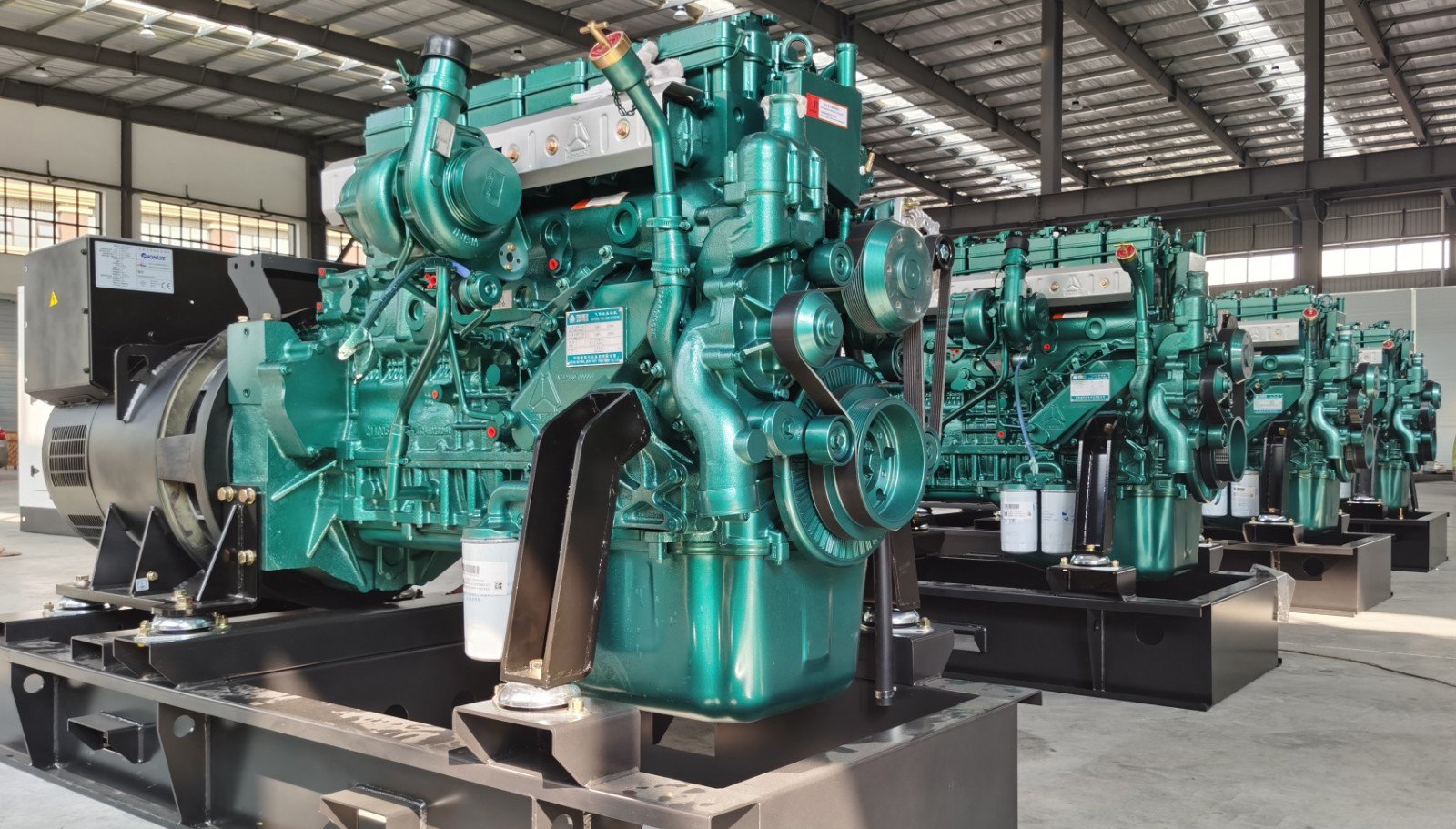
Product Parameters
AC Alternator data | Gas engine data |
Generator Brand | EN | Engine Brand | CNHTC |
Motor Model | EN250-1L4 | Engine Model | T12(Steyr) |
Rated Voltage(V) | 400 | Engine type | Inline 6 cylinders-turbocharged |
Rated Power(H class)kW | 240 | Cylinder Bore x Stroke(mm) | 126mm×115mm |
Rated Capacity(H class)kVA | 300 | Displacement (L) | 11.6 |
Motor efficiency (%)/(400V) | 93.5 | Compression ratio | 11 |
Power factor | 0.8 | Rated output power (single) | 280kW-1500rpm/1800rpm |
Connection Methods | D/Y | Maximum lubricant consumption (g/kW.h) | <0.3 |
Rotor insulation class | H class | Minimum air intake (kg/h) | 1190 |
Rated temperature rise | H class | Ignition method | Electronically controlled single-cylinder independent high-energyignition |
Excitation method | Brush-less | Fuel Control Method | Equivalent combustion, closed loop control |
Rotation speed (min- 1) | 1500/1800 | Debugging method | Electronic commissioning |
Shell protection grade | IP23 |
|
|
Applications of the 1,250 kW Steyr T12 Biogas Generator Plant
Agricultural Waste-to-Energy: Ideal for agricultural facilities generating biogas from waste materials like manure, crop residues, or food waste.
Landfill Gas-to-Energy: Utilizes landfill gas to generate power, reducing greenhouse gas emissions and offering a sustainable solution for waste management.
Wastewater Treatment Plants: Provides reliable power for wastewater treatment facilities, where biogas is generated as a byproduct of anaerobic digestion.
Industrial & Commercial Applications: Suitable for large-scale industrial plants, factories, and commercial buildings that require reliable and sustainable power generation.
Microgrid & Renewable Energy Systems: Integrates well into microgrid applications and renewable energy systems, providing flexible and environmentally friendly power.
Off-Grid Applications: Ideal for remote or off-grid sites where biogas is available as a fuel source, reducing dependency on traditional fuel sources.
Why Choose Steyr T12 Biogas Generator?
Proven Steyr Engine Platform: The Steyr T12 series has a long track record of reliability and performance in industrial applications.
Biogas Adaptability: Specifically designed for biogas, this engine can run on a variety of renewable gases, making it an ideal solution for green energy projects.
Parallel Configuration for Flexibility: With 5 units in parallel, this setup allows for easy scalability, redundancy, and flexibility in operation and maintenance.
High Efficiency and Low Emissions: Compared to diesel or coal-fired generators, biogas-powered generators help reduce CO₂ emissions and operational costs.
Environmental Benefits: Ideal for waste-to-energy projects, turning agricultural or industrial waste into useful power while reducing landfill and methane emissions.
Modular Design for Easy Deployment: The system can be quickly and efficiently deployed in various locations, whether in open fields or urban environments.
Frequently Asked Questions
Q1: What is the advantage of using biogas as a fuel for the generator?
A1: Biogas is a renewable and sustainable fuel derived from organic waste, such as agricultural waste, landfill gas, or wastewater treatment plants. By using biogas, you reduce reliance on fossil fuels and significantly lower CO₂ emissions. It also provides a cost-effective solution for power generation in locations with biogas availability.
Q2: Can the Steyr T12 biogas generator be used in off-grid locations?
A2: Yes, the Steyr T12 biogas generator is ideal for off-grid locations where natural gas or biogas is available. It can provide reliable power in remote areas or as part of a microgrid system.
Q3: How does the parallel configuration of 5 units benefit the system?
A3: The parallel configuration allows for flexibility and scalability. If one unit needs maintenance or experiences a fault, the other units can continue to operate, ensuring that the plant remains functional. Additionally, it offers the ability to add more units in the future to meet growing power demands.
Q4: What maintenance is required for the Steyr T12 biogas generator?
A4: Routine maintenance includes checking the fuel system, replacing air and fuel filters, inspecting engine oil and coolant levels, and ensuring that all components are functioning properly. Regular service intervals should be followed as per the manufacturer’s recommendations to maintain peak performance and reliability.
Q5: What are the environmental benefits of using biogas-powered generators?
A5: Biogas-powered generators offer a significant environmental advantage by reducing greenhouse gas emissions, including methane, which is a potent greenhouse gas. These systems also help manage waste materials (e.g., agricultural, landfill), converting them into useful energy while preventing environmental pollution.


