EG(Ethylene Glycol)、PG(Propylene Glycol)
Its main functions are:
Preventing freezing in winter
Raising the boiling point
Preventing engine overheating
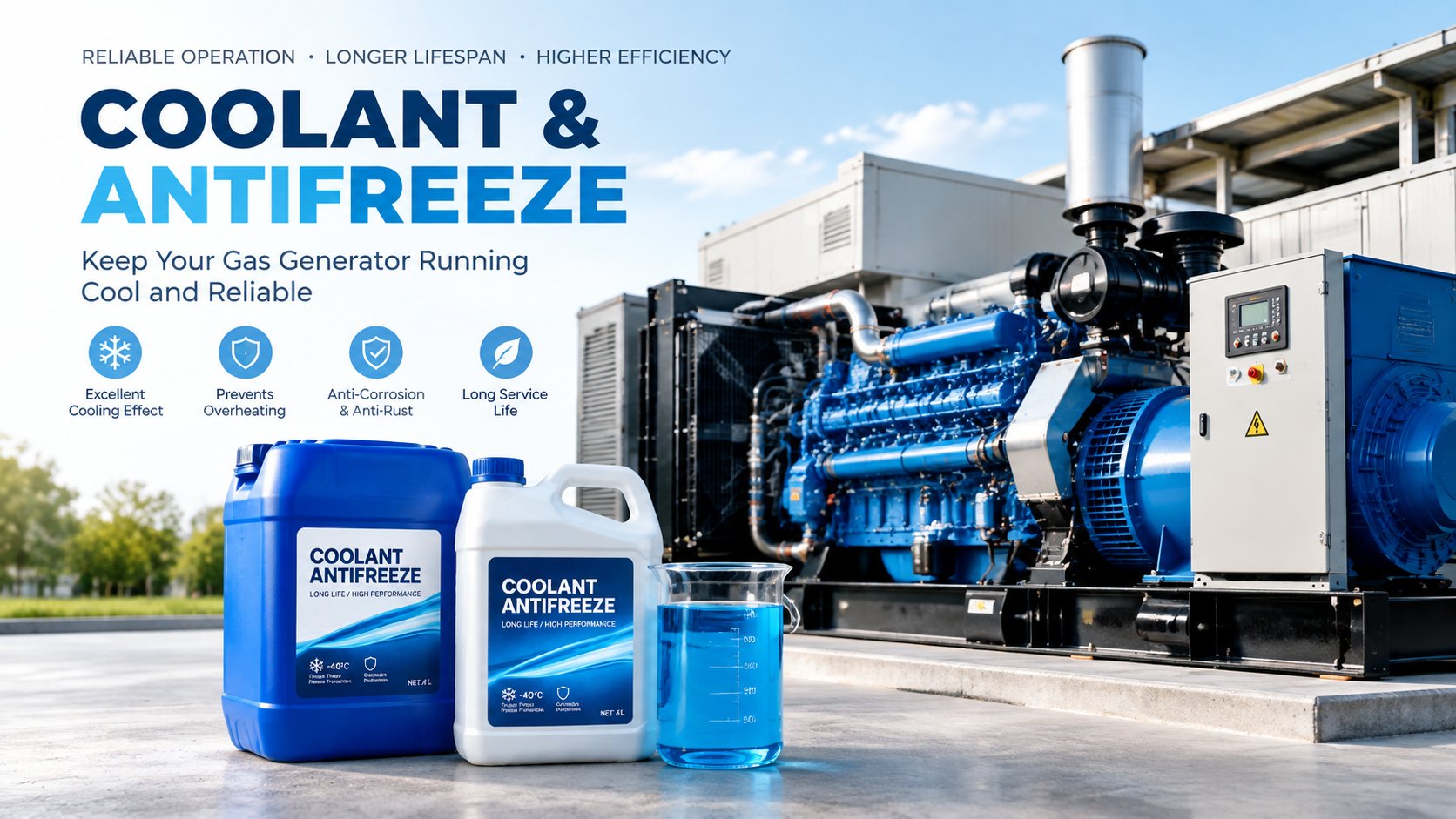
Coolant is the liquid actually used in the engine cooling system. It is generally composed of:
Antifreeze (ethylene glycol or propylene glycol)
Deionized water or distilled water
Rust inhibitor
Corrosion inhibitor
Anti-cavitation additive
Anti-foam additive
The functions of coolant include:
Antifreeze protection
Heat dissipation
Corrosion protection
Scale prevention
Anti-cavitation
Water pump lubrication
For gas engines and gas generator sets: what is added is coolant, not straight antifreeze concentrate.
For example: 50% antifreeze + 50% deionized water, or a factory-premixed coolant.
Many users think water is cheap and just add water. However, long-term operation can lead to:
Radiator scaling
Cylinder liner corrosion
Water pump wear
Cylinder liner cavitation
lEngine freeze cracking in winter
Especially for gas engines with long continuous operation hours, the requirements for the cooling system are higher; therefore, coolant that meets the engine manufacturer's specifications must be used.
Inquiry Now

Longcheng Road 31, Building 3, Qingdao City, Shandong Province
© 2025 Qingdao En Energy Technology Co., Ltd All Rights Reserved.
Powered by HiCheng

